
Skip to content
Cellar & basement waterproofing for York and 15 miles aroundinfo@basementwaterproofingyork.co.uk

Service areas

York, postcode by postcode

Every part of York has its own mix of houses, ground and river risk. This is what we typically find below ground in each postcode area we cover.

Row of red brick Victorian terraced houses with bay windows

We work within about 15 miles of York. That covers the whole of the city and the villages around it, from Poppleton and Rufforth in the west to Dunnington, Elvington and Stamford Bridge in the east, and from Strensall and Haxby down to Bishopthorpe. If you are just outside, ask anyway – choose "Elsewhere near York" in the damp check.

YO1 Inside the city walls, close to the Ouse and Foss

Typical properties
Georgian townhouses with full basement storeys, medieval and Victorian shops with cellars under Coney Street, Stonegate, Micklegate and Fossgate. Many are listed.
Water and ground
Low streets near the rivers – King's Staith, Skeldergate, North Street – see the river rise into the ground regularly. Removable drained systems are usually the right answer in listed buildings.
YO10 Fishergate, Fulford, Heslington, Tang Hall

Typical properties
Victorian and Edwardian terraces off Fishergate and Fulford Road, larger villas in Fulford, and 20th-century housing around Tang Hall and Heslington.
Water and ground
Streets near the Foss and the Ouse sit on wet river deposits. Tang Hall Beck and Osbaldwick Beck add surface-water risk further east.

YO23 South Bank, Clementhorpe, Bishopthorpe, Dringhouses

Typical properties
One of York's densest areas of terraces with coal cellars – South Bank and Clementhorpe especially.
Water and ground
Clementhorpe and the streets towards Terry Avenue are low and close to the Ouse. Higher streets of South Bank are drier but cellars still sit in clay that holds water.

YO24 Holgate, Acomb, Woodthorpe

Typical properties
Victorian terraces around Holgate Road and Poppleton Road, older village houses in Acomb, then 1930s semis and post-war estates.
Water and ground
Mostly away from the rivers, so problems tend to be damp walls, raised ground outside and condensation rather than flooding.

YO26 Leeman Road, Poppleton, Rufforth

Typical properties
Terraces in the Leeman Road area, newer housing in Poppleton and village properties further out.
Water and ground
The Leeman Road area is low-lying beside the Ouse and has flooded in the past; cellars there need drained systems sized for high groundwater.

YO30 Clifton, Bootham, Rawcliffe, Skelton

Typical properties
Large Victorian and Edwardian villas with full basements along Bootham and Clifton, and later housing in Rawcliffe and Skelton.
Water and ground
Clifton Ings and Rawcliffe Meadows hold floodwater beside the Ouse. Big period basements here are often being converted – Grade 3 drained systems are typical.

YO31 The Groves, Heworth, Huntington Road

Typical properties
Tight rows of Victorian terraces with cellars in The Groves, and larger houses in Heworth.
Water and ground
Huntington Road and the streets beside the Foss were badly affected in the 2015 floods. Groundwater rises quickly here when the Foss is high.

YO32 Haxby, Wigginton, Strensall, Huntington

Typical properties
Mostly 20th-century houses with fewer cellars, plus older village houses and farmhouses that do have them.
Water and ground
The upper Foss runs through Strensall and Huntington. Typical jobs are small village cellars, damp stores and repairs to older tanking.

YO19 Dunnington, Elvington, Wheldrake

Typical properties
Village houses, farmhouses and converted outbuildings with cellars.
Water and ground
The River Derwent floods its meadows regularly. Older farmhouse cellars often need repairs to historic tanking.

YO41 Stamford Bridge and nearby villages

Typical properties
Village and town houses, a number with cellars close to the Derwent.
Water and ground
Stamford Bridge has a history of flooding from the Derwent; we size sumps and back-up power with that in mind.
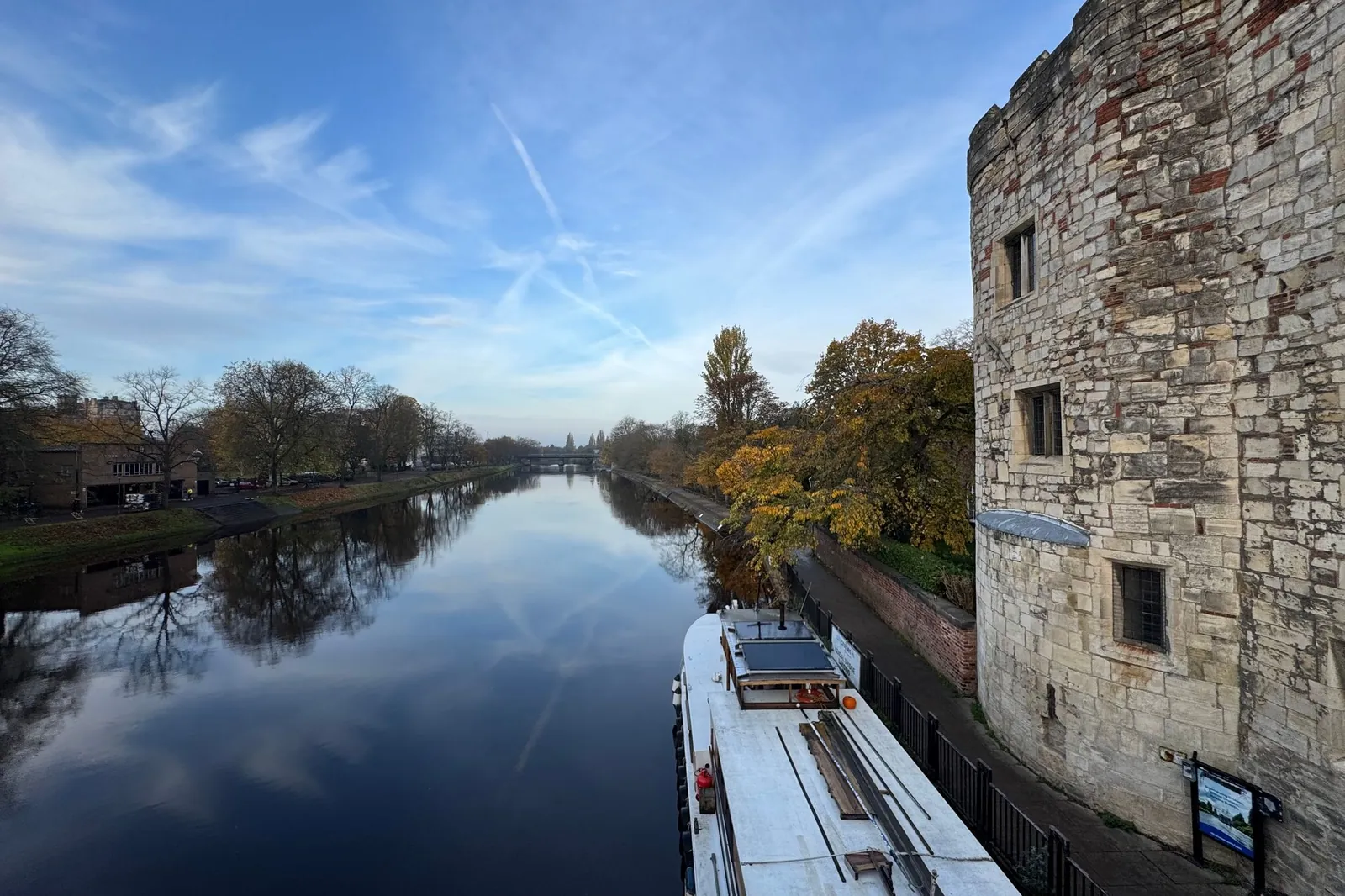
The River Ouse in York on a calm autumn day
The Ouse on a calm day. After heavy rain it can rise by several metres, and groundwater in the streets nearby rises with it.

Check your own flood risk

The Environment Agency's long-term flood risk service lets you look up the risk from rivers, surface water and groundwater for any address in England. It is worth checking before a cellar conversion – and we look at it as part of every survey.

Remember that a waterproofing system deals with groundwater coming through walls and floors. If water could enter at street level through doors or airbricks during a flood, that needs separate property flood resilience measures. Read more about our approach to basement waterproofing in York or the methods we use.

Free damp check